Jordan Davidson
Author
-
Meet and Greet
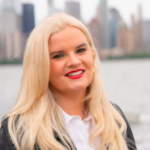
It’s a dreaded question. It’s also the title of Jordan Davidson’s (she/her) first book (which is out today). When she was 24 years old, doctors told her she might not be able to have kids—and if she did want them, she better hurry. But living in a 5th floor walkup in NYC with tens of thousands in student loan debt, Jordan didn’t feel ready. She asked friends and the internet to find resources to decide how to know if it was time for her to have kids, but didn’t find much. “There really weren’t any ‘pre-parenting’ books, and most of the resources that existed weren’t inclusive or diverse,” she says, “As a journalist, I decided to dig into the apprehension I felt like I would with any story.” The rest is history… and a book that seeks to answer the Qs she had and many, many more.
Read on for some advice from Jordan, no matter how you feel about having children.
Have you always known you wanted kids? Did your diagnosis with endometriosis affect that at all?
I think a core part of me has always wanted children, but I could also see a life without them. At this point, I would definitely like to have kids. I like to think writing this book has given me the tools I need to be a good parent, much better than I would have been at 24. But it has been challenging for me to get—and then stay—pregnant because my ovaries are damaged from surgeries that I had for endometriosis in my teens.
We know you did a ton of research for the book. Could you share an insight you learned that shocked, excited, or interested you?
There is a chapter in the book that talks about the external pressures people feel to have kids. It covers everything from immigrant parents, to stereotypes Black women face about fertility, and the pronatalist aspects of many religions. Being religious is a strong predictor of whether you’ll have children. The more religious you are, the more likely it is you’ll have children. The link between religion and childbearing isn’t specific to 1 denomination. Atheists are notably more likely to not have children.
I can’t say any of that shocked me, but what did surprise me was a study that found the differing birth rates between those who are and aren’t religious is significant enough that it could reverse secularization in some countries, meaning that people of faith would outnumber non-practicing individuals. Those religiously affiliated have 1 child more, on average, than those with secular views. Given the differences in fertility rate, researchers predict a substantial decline in the secular population by 2050.
What kinds of things should people be thinking about with regards to fertility in their 20s and 30s? What kind of advice do you have for those who are struggling?
I think fertility testing (AMH, FSH, LH, estrogen levels) is something everyone who is assigned female at birth should do if they think they want kids. It’s good to be educated. The book covers fertility preservation in much more detail than I can right now (including fertility preservation for people seeking hormone-based gender-affirming care).
That said, these tests don’t predict your ability to get pregnant. There are people with great numbers who struggle to get pregnant, and people with abysmal ones who go on to have kids because, at the end of the day, it takes just 1 egg and 1 sperm to make a baby. These tests are more useful for detecting potential fertility issues, as well as how you’ll respond to fertility medications.
What about for folks who don’t want kids? Do you have any wisdom you’d like to impart?
If you know, without a doubt, that you don’t want kids, consider getting a vasectomy or your tubes tied. (You can also get your tubes removed, which comes with the added bonus of lowering your risk of ovarian cancer!) Quite a few childfree people I interviewed said they regretted waiting as long as they did for their sterilization procedures. Our pronatalist society makes people feel guilty for saying they don’t want to have kids. It can be hard to tune that out, but try not to let it dictate your life.
If you think you don’t want kids, but you aren’t certain, just live your life. I interviewed over 300 people for this book and so many people relate to the pressure to make a decision, so much so that they just leave “it up to fate.”
Is there anything else you want to share with our readers?
I’ve talked quite a bit about myself in this interview but the book really isn’t about me. The book is around 100k words and I appear in maybe 1k of them, so 1%. The book is really an exploration of why we feel the way we do, what internal and external factors shape the way we feel about parenthood, and how to identify those factors so you can make a decision that works for you. A lot of people fear they will regret their choice, whichever way they decide. Ultimately, making a decision that works for you is all about setting realistic expectations that factor in your individual feelings, your environment, and the demands of parenthood.